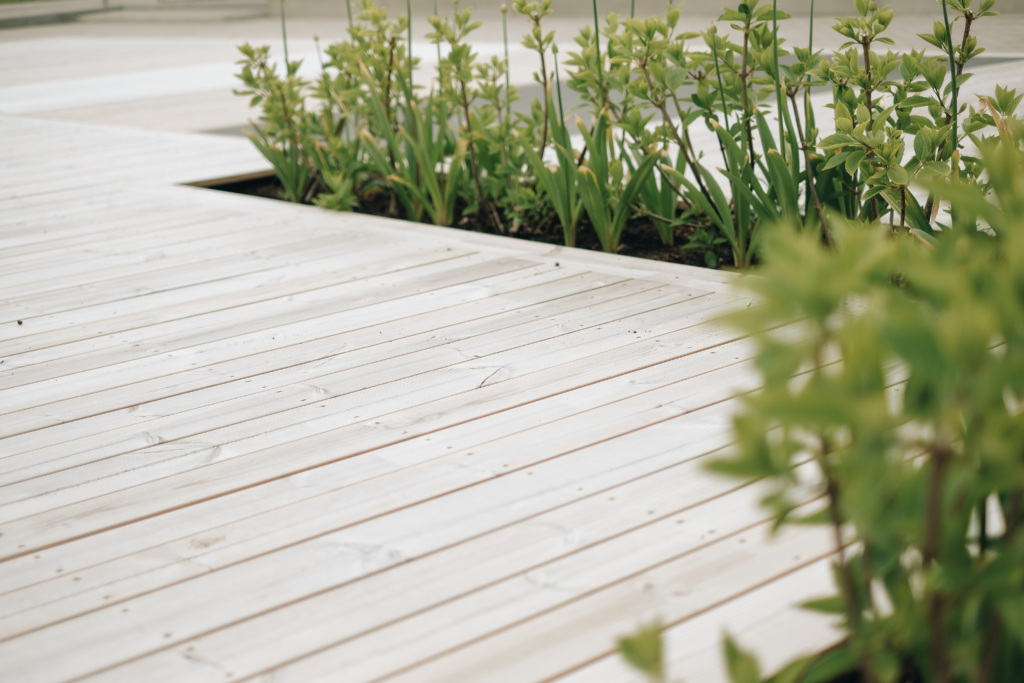
A Well-Built Deck Starts Long Before the First Board Is Installed. A well-built deck is much more than just an outdoor surface next to a house. It is a place to enjoy a morning coffee in summer, spend time with family and friends and make better use of the outdoor space surrounding your home. At the same time, the durability and comfort of a wooden deck depend largely on the decisions made long before the first decking board is installed.
In a Nordic climate, deck construction must take moisture, frost, temperature fluctuations and periods of intense UV exposure into account. For this reason, the deck subframe, foundation and selected decking boards all directly affect how long the deck will retain its appearance and functionality.
Deck Construction Starts with a Strong Foundation
One of the most common mistakes in deck construction is paying too little attention to the supporting structure. Even high-quality decking boards will not remain straight and stable for long if the deck subframe is weak or poorly ventilated.
Before starting a decking project, it is important to consider how the deck will be used. A simple deck at a summer cottage or a small balcony may require a different solution than a heavily used wooden deck attached to a family home. The greater the load and daily use, the more important a strong structure and high-quality construction timber become.
Deck construction usually begins with preparing the foundation. In Northern climates, crushed stone bases, concrete blocks and post foundations are commonly used, depending on the soil conditions and the size of the deck. There is no single answer to the question of whether a deck requires a foundation. Smaller and lower decks can often be built on a simpler base, while larger structures require a stronger load-bearing solution.
Once the base has been prepared, the deck subframe is installed. The strength of this structure directly affects the durability of the entire deck. Pressure-treated construction timber is most commonly used for deck subframes due to its suitability for outdoor conditions.
It is also important to ensure that the deck is raised sufficiently above ground level and that air can circulate beneath the structure. If moisture remains trapped in the timber for extended periods, it can reduce the durability of both the subframe and the decking boards.
When Is the Best Time to Build a Deck?
The best time for deck construction is generally from spring to early autumn, when the ground is drier and temperatures are more stable. Building a deck in spring allows it to be enjoyed throughout the summer and gives the timber time to adapt before autumn arrives.
At the same time, decking projects are often completed during the middle of summer, particularly as part of summer cottage construction or larger garden landscaping projects. In these cases, it is important to ensure that the timber is not exposed to excessive sunlight or moisture for long periods during installation.
The slope of the deck should also be considered. A common question is whether a deck should have a gradient. The answer is yes. A slight slope allows water to drain away more effectively and reduces moisture accumulation between the decking boards. This helps extend the lifespan of both the deck boards and the entire structure.
The durability of a deck is also influenced by the materials used. The most common options in Nordics are pressure-treated decking and thermowood. Pressure-treated timber performs well in areas exposed to higher moisture levels and is a practical solution for decks that see regular daily use. Thermowood, on the other hand, offers greater weather resistance and is highly valued for its natural colour and lower moisture absorption.
Which Decking Boards Should You Choose?
The right decking board depends on both the intended use and the desired appearance. For example, a small entrance patio may require a different solution than a large outdoor living area with deck railings and an outdoor kitchen.
Nordic spruce and Nordic pine are the most commonly used decking materials in harsher climates. Because these trees grow more slowly in northern climates, the timber has a denser structure and performs better in changing weather conditions. Thermowood decking creates a warmer visual appearance and is often chosen for contemporary outdoor spaces. Pressure-treated decking boards are particularly popular in practical, high-traffic applications.
When selecting decking boards, it is also worth considering the profile and dimensions. Wider decking boards create a more uniform surface and reduce the number of visible joints. Narrower boards provide a more detailed appearance and are well suited to smaller spaces, narrow walkways and decks with multiple corners, steps or changes in layout.
The surrounding details also play an important role in the final result. Fence posts, fence boards, deck railings and other garden structures help connect the deck with the rest of the outdoor environment. It is worth planning these elements early in the project to ensure that materials, proportions and overall appearance work together harmoniously.
Over time, a well-built deck becomes a place where summer mornings seem to last longer and evenings always end a little later than planned. If you are planning a decking project, looking for suitable decking boards or need advice on selecting garden timber, contact our team. We will help you find the right timber solution for your project and desired final result.